Abstract
Background:
Recent advances in circulating cell-free DNA (cfDNA) analysis from biofluids have opened new avenues for liquid biopsy (LB). However, current cfDNA LB assays are limited by the availability of existing information on established genotypes associated with tumor tissues. Certain cancers present with a limited list of established mutated cfDNA biomarkers, and thus, nonmutated cfDNA characteristics along with alternative biofluids are needed to broaden the available cfDNA targets for cancer detection. Saliva is an intriguing and accessible biofluid that has yet to be fully explored for its clinical utility for cancer detection.
Methods:
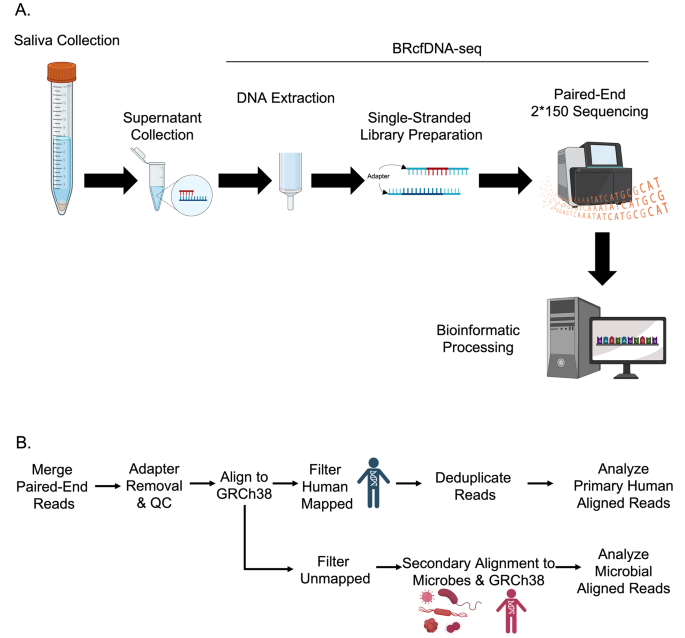
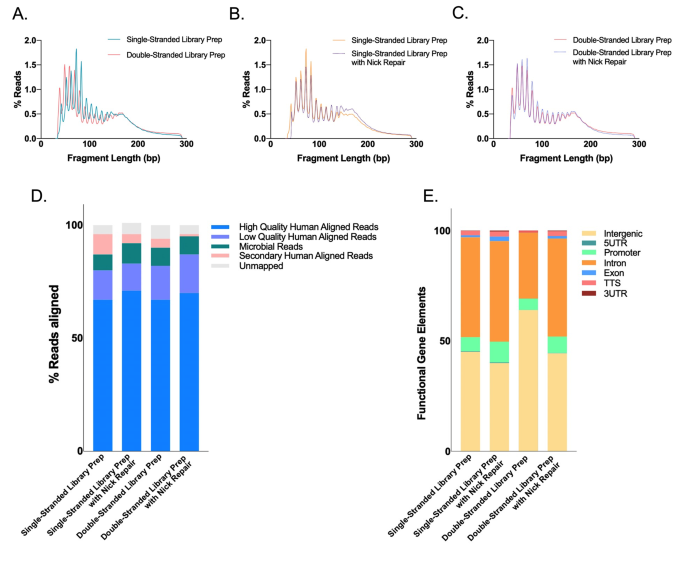
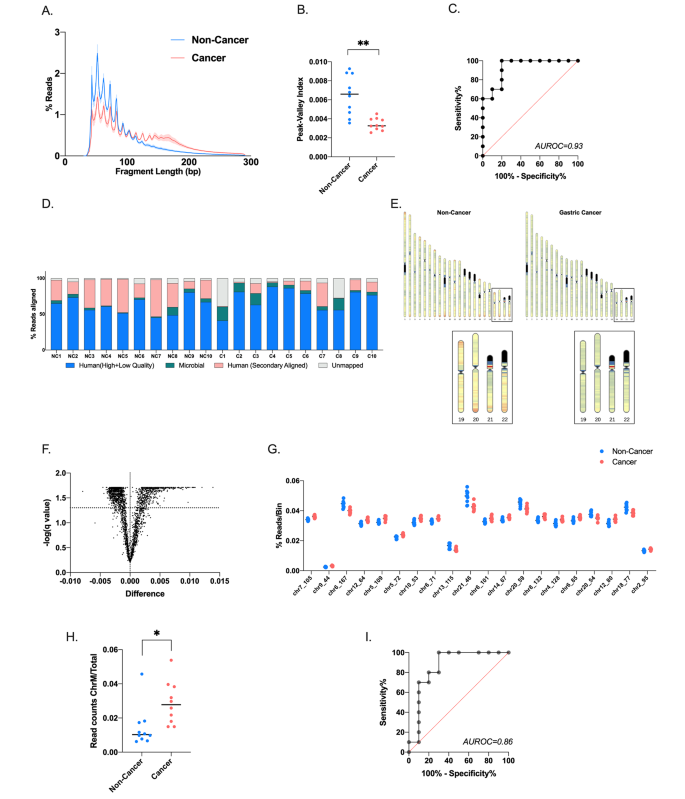
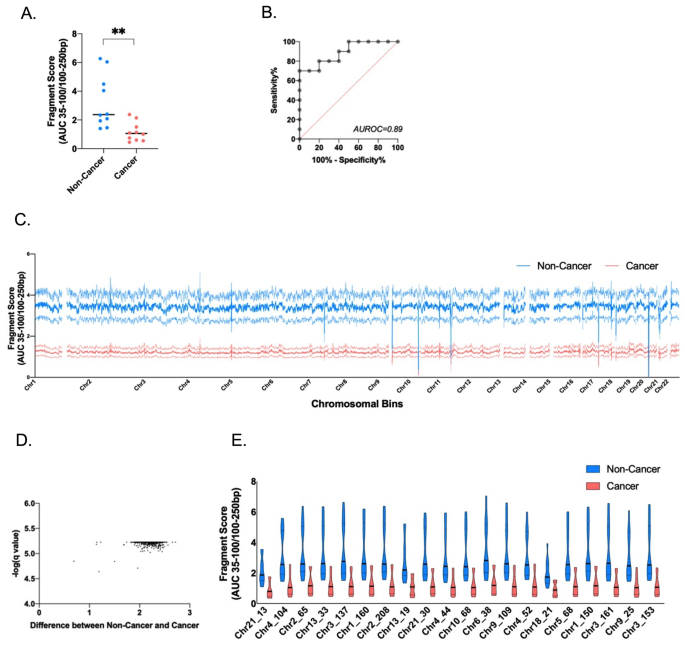
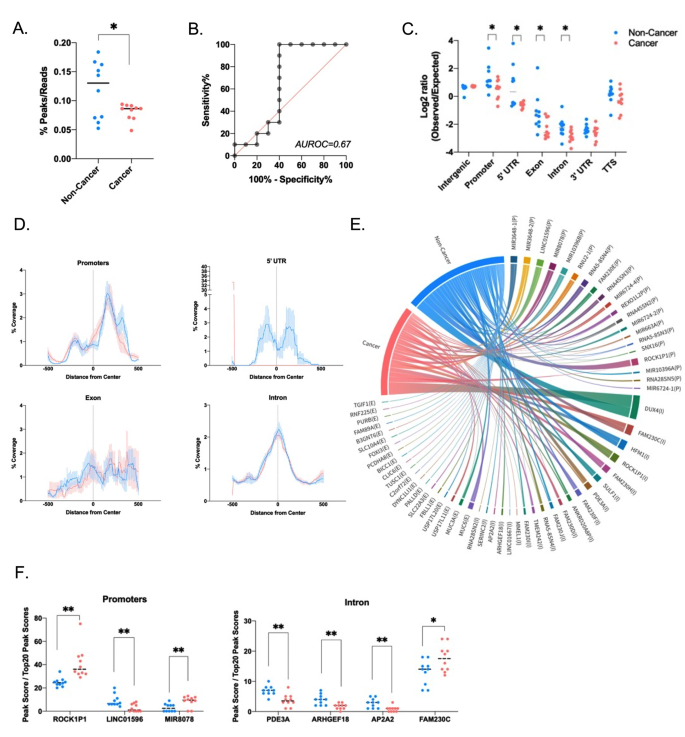
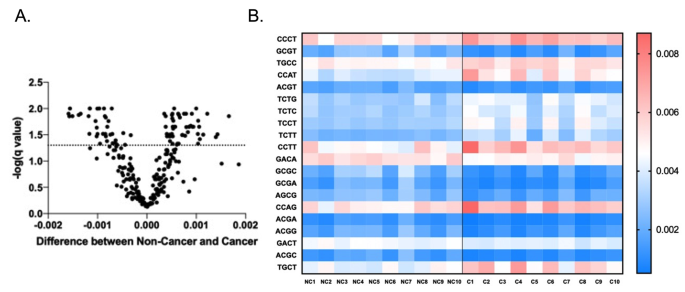
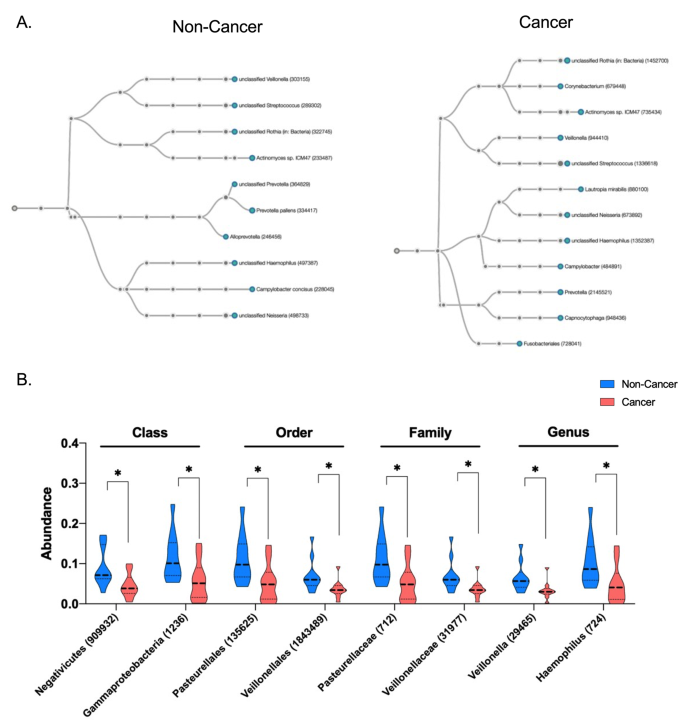
In this report, we employed a low-coverage single stranded (ss) library NGS pipeline "Broad-Range cell-free DNA-Seq" (BRcfDNA-Seq) using saliva to comprehensively investigate the characteristics of salivary cfDNA (ScfDNA). The identification of cfDNA features has been made possible by applying novel cfDNA processing techniques that permit the incorporation of ultrashort, ss, and jagged DNA fragments. As a proof of concept using 10 gastric cancer (GC) and 10 noncancer samples, we examined whether ScfDNA characteristics, including fragmentomics, end motif profiles, microbial contribution, and human chromosomal mapping, could differentiate between these two groups.
Results:
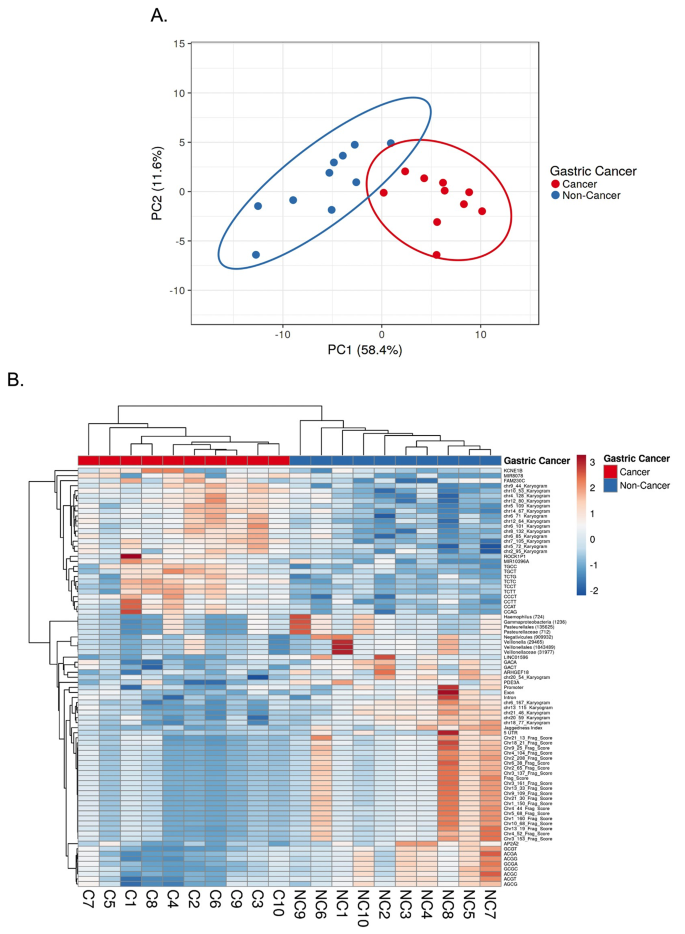
Individual and integrative analysis of these ScfDNA features demonstrated significant differences between the two cohorts, suggesting that disease state may affect the ScfDNA population by altering nuclear cleavage or the profile of contributory organism cfDNA to total ScfDNA. We report that principal component analysis integration of several aspects of salivary cell-free DNA fragmentomic profiles, genomic element profiles, end-motif sequence patterns, and distinct oral microbiome populations can differentiate the two populations with a p value of < 0.0001 (PC1).
Conclusion:
These novel features of ScfDNA characteristics could be clinically useful for improving saliva-based LB detection and the eventual monitoring of local or systemic diseases.
Keywords:
Cell-free DNA; Fragmentomics; Liquid Biopsy; Salivary cell-free DNA.