

BACKGROUND: Bioengineering of human teeth for replacement is an appealing regenerative approach in the era of gene therapy. Developmentally regulated transcription factors hold promise in the quest because these transcriptional regulators constitute the gene regulatory networks driving cell fate determination. Atonal homolog 1 (Atoh1) is a transcription factor of the basic helix-loop-helix (bHLH) family essential for neurogenesis in the cerebellum, auditory hair cell differentiation, and intestinal stem cell specification. The functional versatility of Atoh1 prompted us to test the possibility that Atoh1 may intersect the dental pulp stem cell (DPSC) gene regulatory network governing odontogenic differentiation. METHODS: We isolated DPSCs from human dental pulps and treated the cells with a replication-deficient adenoviral vector to achieve robust ectopic expression of Atoh1, following which the growth and odontogenic differentiation profiles of DPSCs were characterized. RESULTS: DPSCs harboring the Atoh1 expression vector exhibited an approximately 3,000-fold increase in the expression of Atoh1 compared to the negative control, leading to increased DPSC proliferation in the growth medium (Pâ<â0.05). In the odontogenic medium, Atoh1 caused an early induction of BMP2 (Pâ<â0.001) followed by a late induction of BMP7 (Pâ<â0.01) and increased Wnt signaling (Pâ<â0.01). The increased BMP/Wnt signaling led to up to 8-fold increased expression of the master osteogenic transcription factor Osterix (Pâ<â0.005) while exhibiting no significant effect on Runx2 or Dlx5, which are abundantly expressed in DPSCs. Atoh1 stimulated expression of type I collagen (Pâ<â0.005) and small integrin-binding ligand, N-linked glycoproteins (SIBLINGs) such as bone sialoprotein (Pâ<â0.001), dentin matrix protein 1 (Pâ<â0.05), dentin sialophosphoprotein (Pâ<â0.005), and osteopontin (Pâ<â0.001), resulting in increased dentin matrix mineralization (Pâ<â0.05). The odontogenic phenotype is associated with metabolic remodeling marked by enhanced glycolytic flux and attenuated mitochondrial metabolic enzyme activities. CONCLUSIONS: Atoh1, despite being a proneural transcription factor in development, possesses a novel odontogenic function upon ectopic expression in DPSCs. This in vitro study demonstrates a novel odontogenic mechanism mediated by ectopic expression of the transcription factor Atoh1 in human DPSCs. The finding may offer an innovative strategy for gene-based regeneration of the pulp-dentin complex.
The proneural transcription factor Atoh1 promotes odontogenic differentiation in human dental pulp stem cells (DPSCs).
促神经转录因子 Atoh1 促进人类牙髓干细胞 (DPSC) 的成牙分化
阅读:40
| 期刊: | BMC Molecular and Cell Biology | 影响因子: | 2.700 |
| 时间: | 2025 | 起止号: | 2025 Jan 20; 26(1):5 |
| doi: | 10.1186/s12860-025-00530-2 | 种属: | Human |
| 研究方向: | 神经科学 | ||
文献解析
1. 领域背景与文献引入
文献英文标题:Ectopic expression of the proneural transcription factor Atoh1 promotes odontogenic differentiation of human dental pulp stem cells through BMP/Wnt signaling and metabolic remodeling;发表期刊:BMC Oral Health;影响因子:未公开;研究领域:牙髓干细胞成牙分化与牙组织再生
牙组织再生是口腔医学领域的重要研究方向,随着干细胞技术与基因治疗的发展,利用转录因子精准调控牙髓干细胞(DPSC)的成牙分化命运,成为实现牙-牙髓复合体功能性再生的潜在策略。领域发展的关键节点包括2000年左右人DPSC的成功分离鉴定,以及后续骨形态发生蛋白(BMP)、Wnt等核心信号通路在牙发育与修复中调控机制的阐明;当前研究热点聚焦于筛选高效的转录因子或信号分子,解决现有再生策略中存在的分化效率低、再生组织功能不完善等问题;未解决的核心问题包括缺乏特异性调控DPSC成牙分化的关键转录因子,以及对成牙分化过程中的代谢调控机制认识不足。针对这一研究空白,本研究探索了经典前神经转录因子Atoh1在DPSC成牙分化中的调控作用,旨在揭示其跨界调控细胞命运的新机制,为基因介导的牙组织再生提供新的靶点与策略。
2. 文献综述解析
作者以转录因子的功能多样性为核心评述逻辑,首先梳理牙发育与修复中信号通路及转录因子的调控网络,再聚焦Atoh1的已知功能域,结合其与成牙分化核心信号通路的关联,提出研究假设。
现有研究表明,牙发育与修复依赖时空精准调控的基因网络,BMP、Wnt等信号通路通过激活Runx2、Osterix等转录因子,调控干细胞的功能与组织更新,这些研究为牙组织工程提供了理论基础;技术方法上,多采用基因操作结合细胞模型的方式,能有效解析信号通路与转录因子的调控关系,但多数研究聚焦于Atoh1在神经、听觉或肠道组织中的功能,缺乏其在牙髓干细胞及牙组织再生领域的研究,且对成牙分化过程中的代谢调控机制探索较少。本研究通过对比现有研究的空白,首次发现Atoh1在DPSC中异位表达具有成牙分化调控功能,揭示了其通过BMP/Wnt信号通路及代谢重编程介导成牙分化的新机制,填补了Atoh1在牙组织再生领域的研究空白,为基因治疗介导的牙-牙髓复合体再生提供了新的学术依据。
3. 研究思路总结与详细解析
本研究的核心目标是明确Atoh1异位表达对人DPSC成牙分化的调控作用及分子机制,核心科学问题为Atoh1如何通过信号通路及代谢重编程介导DPSC的成牙分化命运决定,技术路线遵循“假设构建→细胞模型建立→表型检测→机制解析→结论验证”的完整闭环。
3.1 牙髓干细胞分离培养与Atoh1异位表达模型构建
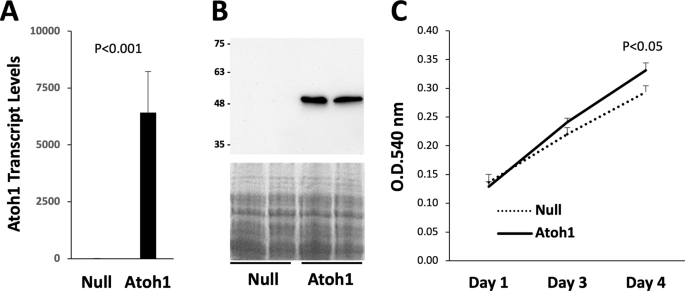
该环节的核心目标是获取高活性的人DPSC,并建立Atoh1稳定异位表达的细胞模型。方法上,从无龋第三磨牙中分离牙髓组织,采用5mg/ml胶原酶37℃消化90分钟,获得细胞后接种于含10%胎牛血清的Advanced DMEM培养基培养;通过复制缺陷型腺病毒载体(Adv-Atoh1)感染DPSC,以空载体(Adv-Null)为对照,感染复数为100,感染2小时后更换培养基继续培养。结果显示,实时荧光定量聚合酶链反应(qPCR)检测发现Adv-Atoh1处理组Atoh1表达水平较对照组升高约3000倍(n=6,P<0.001),蛋白质免疫印迹(Western blotting)结果显示处理组可检测到Atoh1蛋白条带,对照组无明显信号,表明成功建立Atoh1异位表达的DPSC模型。实验所用关键产品:Thermo Fisher Scientific的Advanced DMEM培养基、TrypLE消化液;Proteintech的Atoh1抗体(货号21215-1-AP);Qiagen的RNA提取试剂盒;Bio-Rad的iScript cDNA合成试剂盒、SYBR Green qPCR混合液;Pierce Biotechnology的SuperSignal化学发光底物。
3.2 Atoh1对牙髓干细胞增殖能力的调控
该环节旨在检测Atoh1异位表达对DPSC增殖的影响。方法上,将处理后的DPSC以6000细胞/孔接种于24孔板,采用MTT法在感染后1、3、4天检测细胞增殖:加入0.125mg/ml MTT溶液37℃孵育20分钟,用二甲基亚砜(DMSO)溶解甲瓒结晶后在540nm波长下检测吸光度。结果显示,感染后4天,Adv-Atoh1处理组细胞增殖率显著高于对照组(n=3,P<0.05),表明Atoh1异位表达可显著促进DPSC的增殖活性。
3.3 Atoh1对牙髓干细胞成牙分化表型的诱导
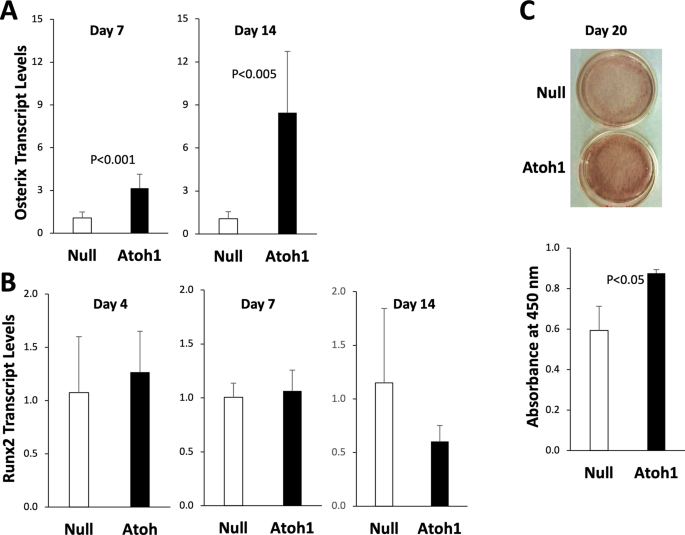
该环节的核心目标是明确Atoh1异位表达对DPSC成牙分化的特异性诱导作用。方法上,将处理后的DPSC接种于成牙分化培养基,培养至7、14天时提取RNA,qPCR检测成牙分化关键转录因子的表达;培养20天后采用茜素红染色检测细胞外基质矿化情况,提取染色结晶后在450nm波长下定量分析。结果显示,处理组Osterix表达水平在第7天升高3倍(n=6,P<0.001),第14天升高8倍(n=6,P<0.005);Runx2和Dlx5表达无显著变化(n=3或6,P>0.05);茜素红染色结果显示处理组细胞外基质矿化程度显著高于对照组(n=3,P<0.05),表明Atoh1可特异性诱导DPSC向成牙细胞方向分化。
3.4 Atoh1对成牙分化相关基质蛋白表达的调控
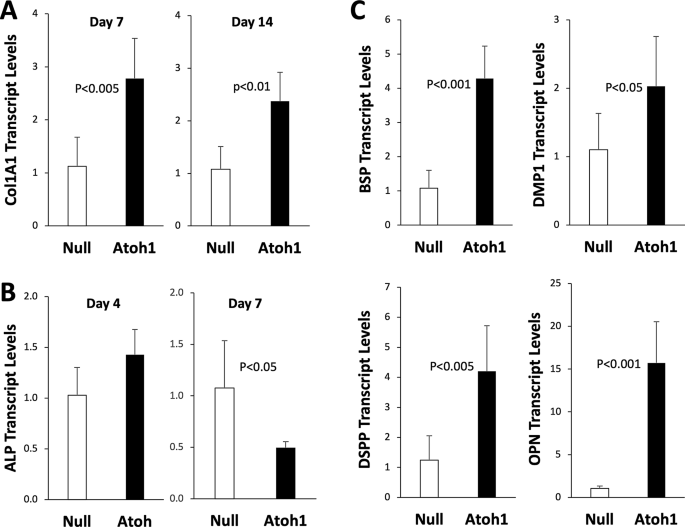
该环节旨在解析Atoh1对DPSC成牙分化过程中基质蛋白表达的影响。方法上,在成牙分化培养第7、14天提取RNA,qPCR检测I型胶原、碱性磷酸酶及小整合素结合配体N端糖蛋白(SIBLINGs)家族蛋白的表达。结果显示,处理组I型胶原(Col1A1)表达在第7天显著升高(n=6,P<0.005),第14天持续升高(n=6,P<0.01);碱性磷酸酶(ALP)表达在第4天略有升高,第7天显著降低(n=3或6,P<0.05);SIBLINGs家族中,骨涎蛋白(BSP)升高4倍(n=6,P<0.001),牙本质基质蛋白1(DMP1)升高2倍(n=6,P<0.05),牙本质涎磷蛋白(DSPP)升高4倍(n=6,P<0.005),骨桥蛋白(OPN)升高15倍(n=6,P<0.001),表明Atoh1可显著促进成牙分化相关基质蛋白的表达,为矿化基质形成奠定基础。
3.5 Atoh1介导成牙分化的信号通路与代谢机制解析
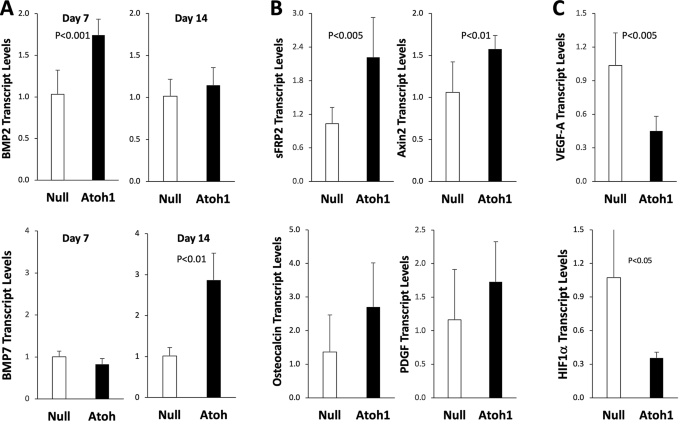
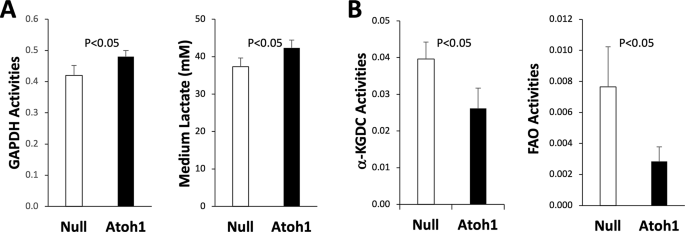
该环节的核心目标是揭示Atoh1调控DPSC成牙分化的分子机制。方法上,在成牙分化培养第7、14天提取RNA,qPCR检测信号分子的表达;培养第10天提取细胞蛋白,检测糖酵解及线粒体代谢相关酶的活性,同时检测培养基中乳酸含量。结果显示,信号通路方面,处理组BMP2在第7天显著升高(n=6,P<0.001),BMP7在第14天显著升高(n=6,P<0.01);Wnt信号通路的负调控因子sFRP2及靶基因Axin2表达显著升高(n=3或6,P<0.005、P<0.01);血管内皮生长因子A(VEGF-A)和缺氧诱导因子1α(HIF1α)表达显著降低(n=3或6,P<0.005、P<0.05)。代谢方面,处理组糖酵解关键酶甘油醛-3-磷酸脱氢酶(GAPDH)活性显著升高(n=3,P<0.05),培养基乳酸含量显著升高(n=3,P<0.05);线粒体代谢相关的α-酮戊二酸脱氢酶复合体(α-KGDC)及脂肪酸氧化(FAO)活性显著降低(n=3,P<0.05),表明Atoh1通过激活BMP/Wnt信号通路,同时调控糖酵解增强、线粒体代谢减弱的代谢重编程,介导DPSC的成牙分化。
4. Biomarker研究及发现成果解析
本研究中,Atoh1作为功能性调控Biomarker,其异位表达可作为DPSC成牙分化的关键靶点;同时,Osterix、BMP2、BMP7及糖酵解相关指标(GAPDH活性、乳酸含量)可作为Atoh1介导成牙分化的特征性Biomarker。筛选与验证逻辑为:首先通过文献调研提出Atoh1调控成牙分化的假设,然后通过细胞模型验证Atoh1异位表达对成牙分化的诱导作用,再通过信号通路及代谢检测验证下游特征性Biomarker的变化。
Biomarker来源为人DPSC细胞及培养上清;验证方法采用qPCR检测基因表达、蛋白质免疫印迹检测蛋白表达、酶活性检测及代谢物含量检测;特异性与敏感性方面,Atoh1异位表达后,Osterix表达水平升高8倍(n=6,P<0.005),BMP2表达显著升高(n=6,P<0.001),GAPDH活性及乳酸含量均显著升高(n=3,P<0.05),具有显著的统计学差异。核心成果提炼:Atoh1作为前神经转录因子,在DPSC中异位表达具有新的成牙分化调控功能,其通过激活BMP/Wnt信号通路及代谢重编程介导成牙分化;该发现的创新性在于首次揭示了Atoh1跨界调控细胞命运的新机制,为牙组织再生提供了新的基因治疗靶点;统计学结果显示,各检测指标均具有显著差异(P<0.05或P<0.01),样本量为n=3或6,数据可靠性较高。
特别声明
1、本页面内容包含部分的内容是基于公开信息的合理引用;引用内容仅为补充信息,不代表本站立场。
2、若认为本页面引用内容涉及侵权,请及时与本站联系,我们将第一时间处理。
3、其他媒体/个人如需使用本页面原创内容,需注明“来源:[生知库]”并获得授权;使用引用内容的,需自行联系原作者获得许可。
4、投稿及合作请联系:info@biocloudy.com。