Background
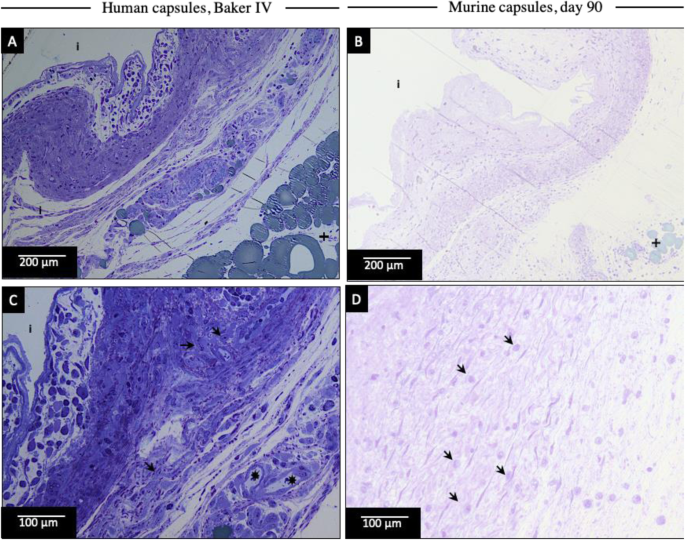
Capsular fibrosis (CF) is the most common long-term complication in implant-based breast augmentation. It is well accepted that the foreign body response (FBR) instigates the development of fibrotic disease. Our study aims to compare murine and human samples of CF and describe the cellular and extracellular matrix (ECM) composition using scanning and transmission electron microscopy (SEM and TEM).
Conclusions
This murine model accurately recapitulates CF found in humans and can be utilized for future research on cellular invasion in capsular fibrosis. This descriptive study helps to gain a better understanding of cellular mechanisms involved in the FBR. Increases of ECM and cellularity were observed over time with SEM and TEM analysis.
Results
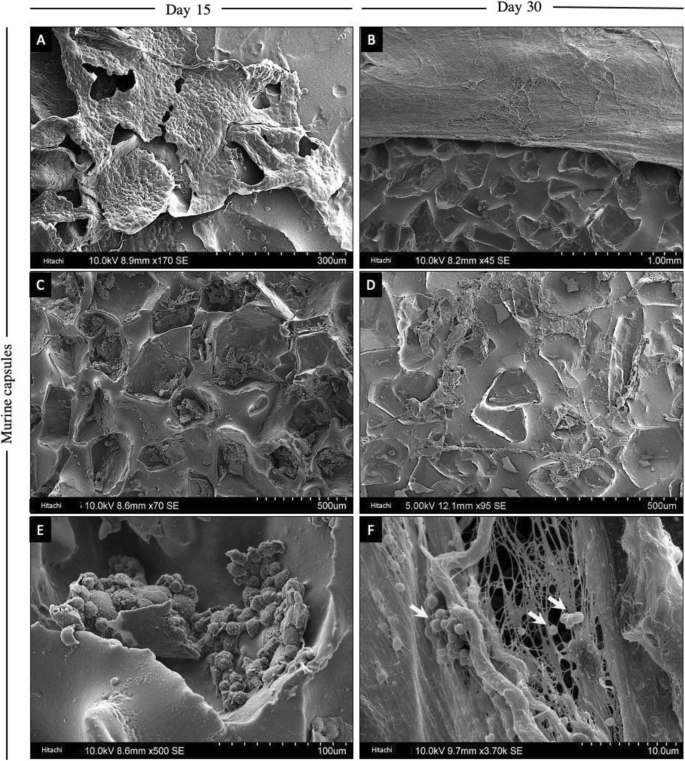
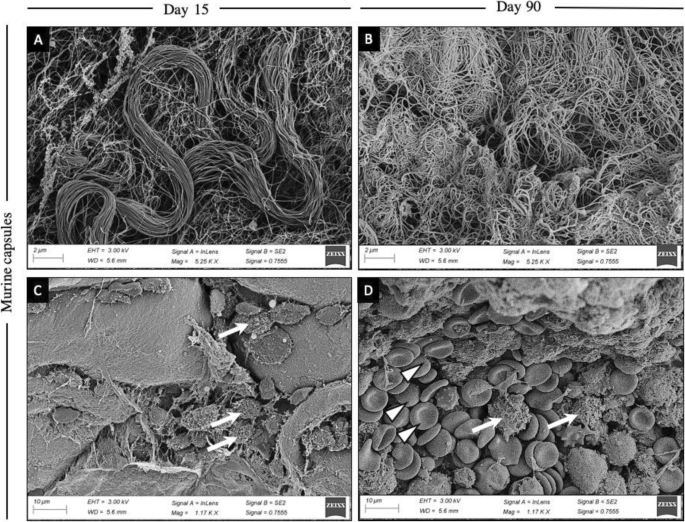
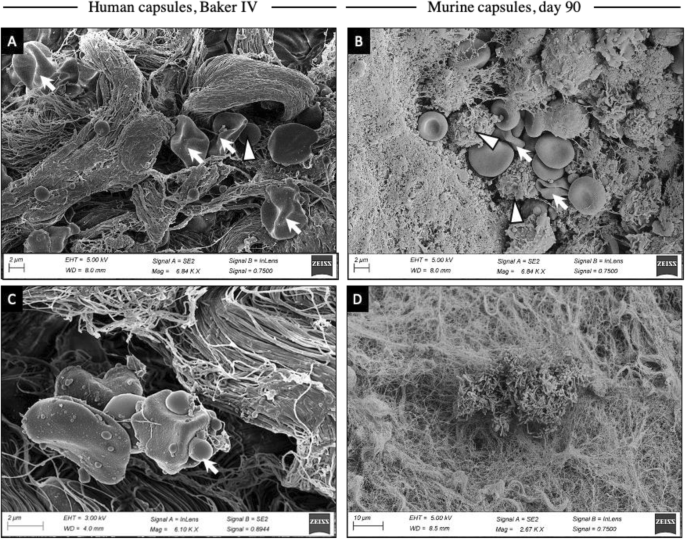
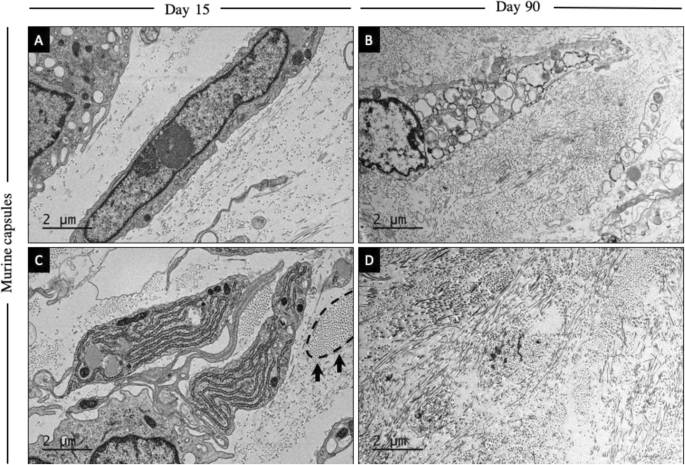
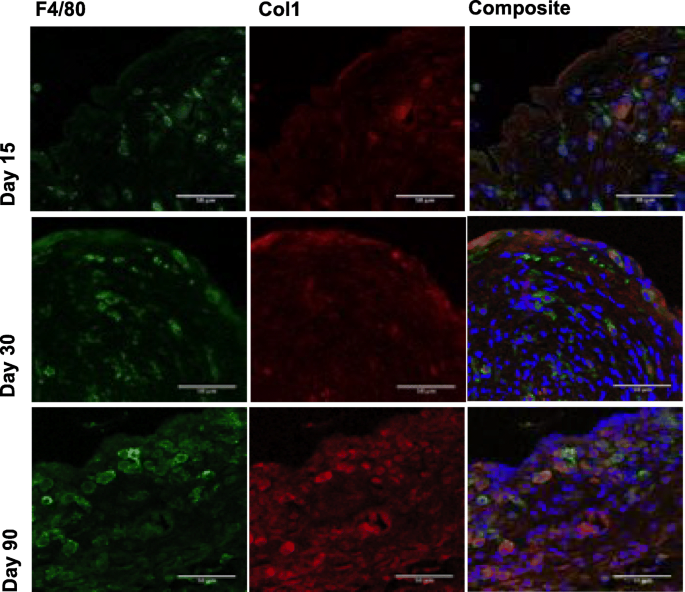
Miniature microtextured silicone breast implants were implanted in mice and subsequently harvested at days 15, 30, and 90 post-operation. Isolated human capsules with the most aggravated form of CF (Baker IV) were harvested post-operation. Both were analyzed with SEM and TEM to assess cellular infiltration and ECM structure. An architectural shift of collagen fiber arrangement from unidirectional to multidirectional was observed at day 90 when compared to days 15 and 30. Fibrosis was observed with an increase of histiocytic infiltration. Moreover, bacterial accumulation was seen around silicone fragments. These findings were common in both murine and human capsules. Conclusions: This murine model accurately recapitulates CF found in humans and can be utilized for future research on cellular invasion in capsular fibrosis. This descriptive study helps to gain a better understanding of cellular mechanisms involved in the FBR. Increases of ECM and cellularity were observed over time with SEM and TEM analysis.