Background
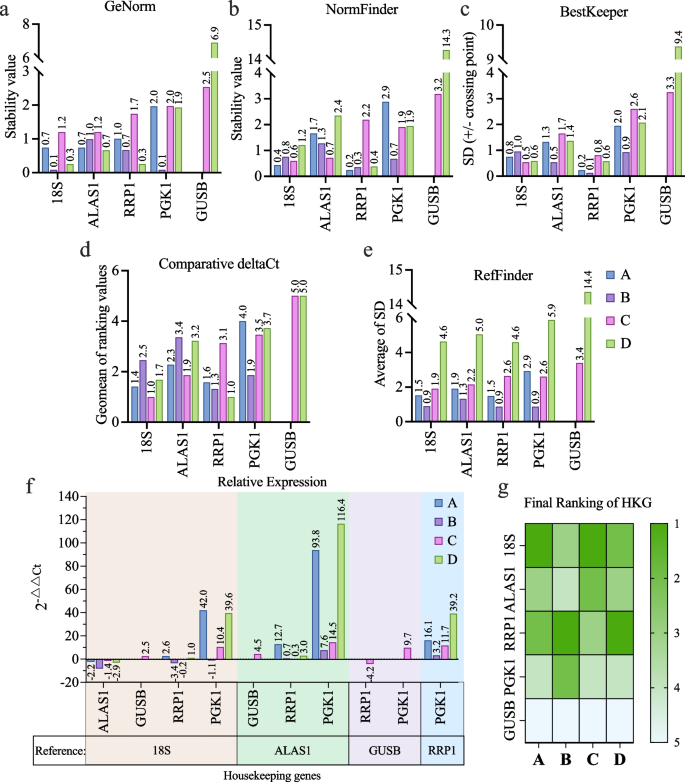
Hypoxic culture conditions have been used to study the impact of oxygen deprivation has on gene expression in a number of disease models. However, hypoxia response elements present in the promoter regions of some commonly used housekeeping genes, such as GAPDH and PGK1, can confound the relative gene expression analysis. Thus, there is ongoing debate as to which housekeeping gene is appropriate for studies investigating hypoxia-induced cell responses. Specifically, there is still contradicting information for which housekeeping genes are stable in hypoxia cultures of mesenchymal stem cells. In this study, candidate housekeeping genes curated from the literature were matched to RNAseq data of normoxic and hypoxic human adipose-derived stem cell cultures to determine if gene expression was modulated by hypoxia or not. Expression levels of selected candidates were used to calculate coefficient of variation. Then, accounting for the mean coefficient of variation, and normalised log twofold change, genes were ranked and shortlisted, before validating with qRT-PCR. Housekeeping gene suitability were then determined using GeNorm, NormFinder, BestKeeper, comparative[Formula: see text], RefFinder, and the Livak method.
Conclusions
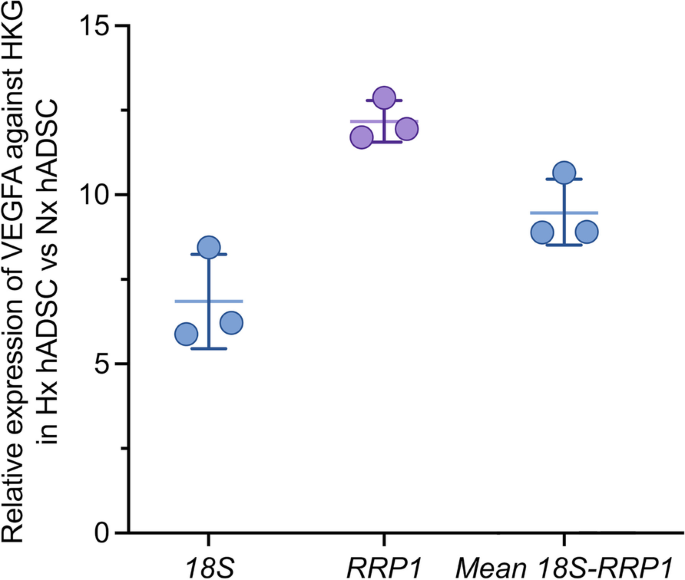
We have demonstrated that 18S and RRP1 are suitable housekeeping genes for use in hypoxia studies with human adipose-derived stem cell and should be used in combination. Additionally, these data shown that the commonly used GAPDH and PGK1 are not suitable housekeeping genes for investigations into the effect of hypoxia in human adipose-derived stem cell.
Results
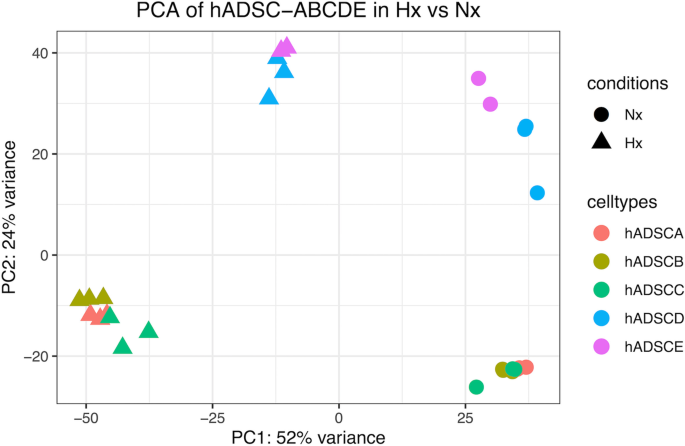
Gene expression levels of 78 candidate genes identified in the literature were analysed in the RNAseq dataset generated from hADSC cultured under Nx and Hx conditions. From the dataset, 15 candidates with coefficient of variation ≤ 0.15 were identified, where differential expression analysis results further shortlisted 8 genes with least variation in expression levels. The top 4 housekeeping gene candidates, ALAS1, RRP1, GUSB, and POLR2B, were chosen for qRT-PCR validation. Additionally, 18S, a ribosomal RNA commonly used as housekeeping gene but not detected in the RNAseq method, was added to the list of housekeeping gene candidates to validate. From qRT-PCR results, 18S and RRP1 were determined to be stably expressed in cells cultured under hypoxic conditions. Conclusions: We have demonstrated that 18S and RRP1 are suitable housekeeping genes for use in hypoxia studies with human adipose-derived stem cell and should be used in combination. Additionally, these data shown that the commonly used GAPDH and PGK1 are not suitable housekeeping genes for investigations into the effect of hypoxia in human adipose-derived stem cell.